English
Views: 0 Author: Site Editor Publish Time: 2026-06-12 Origin: Site
Selecting the ideal material for exterior spaces frequently feels like an expensive gamble. Builders and property owners face a relentless battle against harsh weather. Traditional timber and first-generation composite materials often fail to deliver on their long-term promises. Uncapped boards frequently lead to unexpected upkeep demands. They suffer from rapid color fading and serious structural degradation over time. These unexpected failures frustrate residential homeowners. They also create substantial liability risks for commercial facility managers.
Fortunately, the construction materials industry has dramatically shifted. Second-generation co-extrusion technology now serves as the established standard for both commercial and high-end residential applications. This guide objectively evaluates the structural and practical advantages of co-extruded boards. You will learn how to safely navigate past generic marketing claims. We will help you make a confident, evidence-based purchasing decision for your upcoming architectural or landscaping project.
360-Degree Shielding: Co-extrusion completely encases the core, neutralizing the moisture absorption issues that plague 1st-generation composites.
Structural Efficiency: Advancements like round hole co-extruded WPC decking provide commercial-grade strength while reducing weight and shipping costs.
Mitigated Risks: Engineered caps drastically reduce the risk of fading, staining, and scratching, preserving property value in extreme weather conditions.
First-generation composite boards revolutionized the decking market initially. Manufacturers blended wood flour and recycled plastics to create a timber alternative. However, this early manufacturing process left organic wood fibers exposed on the board surface. Exposed wood particles naturally absorb environmental moisture. Once water infiltrates the core, mold begins to grow internally. The boards inevitably swell, warp, and rot. Furthermore, sunlight relentlessly attacks these uncapped surfaces. It degrades the color pigments and causes severe chalking over time.
Engineers developed the co-extrusion process to eliminate these inherent flaws. Co-extrusion represents a massive leap in material science. During manufacturing, machines extrude the inner composite core and an outer polymer shield simultaneously. They fuse these two layers together under extreme heat. The resulting protective cap completely encapsulates the core. It prevents any moisture from reaching the vulnerable wood fibers inside.
Facility managers, landscape architects, and homeowners now standardize their projects on co-extruded materials. They recognize the importance of avoiding premature replacement cycles. Uncapped materials often require replacing within a decade. Co-extruded boards deliver reliable performance for decades. They eliminate trip hazards caused by warping. They preserve aesthetic appeal in high-visibility areas.
Consider the core differences outlined in the table below:
Performance Metric | 1st-Generation (Uncapped) | 2nd-Generation (Co-extruded) |
|---|---|---|
Moisture Protection | Poor. Exposed fibers absorb water readily. | Excellent. Impermeable polymer shield blocks water. |
Color Retention | Fades significantly within the first year. | Highly stable. UV inhibitors prevent fading. |
Stain Resistance | Porous surface absorbs oils and spills. | Non-porous cap wipes clean easily. |
Structural Lifespan | Moderate. Prone to swelling and rot. | Extended. Protected core remains intact for decades. |
The primary mechanism behind co-extrusion success lies in its impermeable polymer shield. This engineered cap literally wraps the entire board. It acts as an impenetrable barrier against environmental water ingress. Traditional materials fail when water repeatedly enters and exits their cellular structure. This constant movement degrades structural integrity.
In colder climates, moisture absorption causes devastating freeze-thaw damage. Water enters uncapped boards during rainstorms. Temperatures drop below freezing. The trapped water expands into ice. This expansion creates internal micro-cracks. Over multiple winters, these tiny cracks multiply. Eventually, the board splinters and falls apart. Co-extrusion entirely eliminates this destructive cycle. The core remains bone-dry. You can confidently install these boards in extreme climates. They perform exceptionally well in marine environments, coastal properties, and poolside applications.
Manufacturers often use the term "maintenance-free" in their marketing materials. A necessary reality check is required here. No exterior building product is completely free of maintenance. However, co-extrusion technology translates to "ultra-low maintenance" in real-world scenarios. You only need basic seasonal cleaning.
Homeowners spend countless weekend hours maintaining traditional timber. They must sand rough surfaces. They must apply toxic chemical stains. They must seal the wood annually to prevent rot. Co-extruded boards require none of these grueling chores. Furthermore, accidental spills no longer cause permanent anxiety. Red wine, barbecue grease, and chemical sunscreens simply sit on top of the polymer cap. They cannot penetrate the non-porous surface. You can easily wipe them away using warm water and mild dish soap. The internal composite core never stains.
Material engineering continues to advance beyond basic surface protection. The internal profile of the board plays a critical role in its performance. Older hollow designs utilized square or rectangular internal channels. These sharp internal corners created stress concentration points. Heavy loads or impacts could cause the boards to crack under pressure.
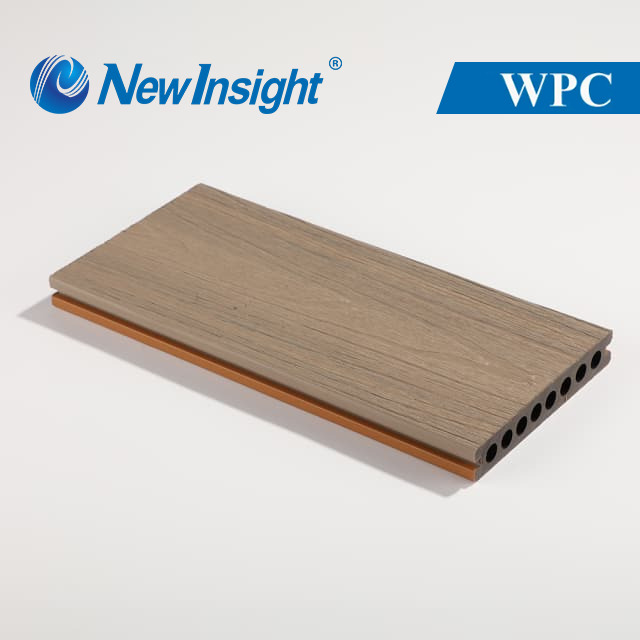
Modern innovation focuses heavily on structural physics. High-performance products like Round Hole Co-extruded WPC Decking resolve these earlier design flaws. They utilize circular internal channels. The architectural logic behind this is simple. A circle naturally distributes pressure evenly across its entire arch. It eliminates weak stress points entirely.
Increased Load Capacity: Arch mechanics provide structural integrity comparable to heavy solid boards.
Reduced Material Weight: The hollow channels reduce overall board weight by 25-30 percent.
Easier Installation: Lighter boards allow contractors to maneuver materials quickly. This reduces physical fatigue on the job site.
Reduced Joist Strain: Lower dead weight means less stress on your foundational sub-structure over time.
By specifying Circular-hole WPC Decking, architects can achieve commercial-grade spanning capabilities. They achieve this without adding unnecessary bulk or complicating the construction process.
Ultraviolet radiation destroys building materials. It breaks down chemical bonds in plastics. This process is called photo-degradation. It causes surfaces to turn brittle and lose their original color. Co-extruded caps contain highly advanced UV inhibitors. These microscopic additives act like permanent sunscreen for your deck. They absorb and safely dissipate solar radiation. The board maintains its rich aesthetic value for twenty years or more.
Additionally, the polymer shield incorporates robust anti-abrasion additives. High-traffic outdoor living spaces experience constant physical abuse. People drag heavy patio chairs across the surface. Large pets run across the boards. Abrasive dirt tracks onto the deck from the garden. The reinforced cap resists these daily scratch hazards effectively. It preserves a pristine, high-end appearance far longer than traditional wood or uncapped alternatives.
Safety remains a paramount concern for residential families and commercial spaces alike. Traditional wood inevitably splinters as it ages. These splinters pose serious risks to bare feet. Co-extruded boards maintain a perfectly smooth, splinter-free surface throughout their lifespan. Manufacturers also engineer specific slip-resistant textures into the capping layer. These subtle wood-grain patterns enhance traction. They provide secure footing even around wet poolside areas.
Furthermore, leading co-extrusion manufacturers prioritize environmental sustainability. They produce the core material using recycled plastics and sustainably sourced industrial wood fibers. This diverts millions of tons of waste from local landfills. Because the boards require no chemical paints or stains, they never off-gas toxic volatile organic compounds (VOCs). They easily meet strict green building certifications and environmental compliance standards.
Even the most advanced engineered materials can fail if installed incorrectly. You must respect the physical properties of the composite material. Understanding implementation realities separates a successful twenty-year installation from a frustrating failure.
All composite and plastic materials expand and contract. They react directly to temperature fluctuations. They expand during hot afternoons. They contract during cool nights. You must account for this thermal movement during installation. Installers must leave precise gaps at the ends of the boards. These expansion gaps prevent the boards from buckling against each other. You should always use the manufacturer's approved hidden fastener systems. These engineered clips secure the boards firmly while still allowing microscopic lateral movement.
Sub-structure preparation requires strict adherence to industry standards. Joist spacing dictates the ultimate strength of the deck floor. Standard residential installations typically require joists spaced 16 inches on center. Commercial applications face heavier pedestrian traffic. Diagonal board layouts also require tighter support. For these situations, you must reduce joist spacing to 12 inches on center. Stretching joist spacing beyond these limits will inevitably cause the boards to sag.
Finally, you must prioritize proper airflow beneath the installation. Adequate ground clearance remains absolutely essential. Moisture constantly evaporates from the soil below. Without cross-ventilation, this humid air becomes trapped under the deck. Continuous trapped moisture can void the manufacturer's warranty. Ensure your design allows air to flow freely beneath the substructure to keep the environment stable.
Best Practices & Common Mistakes:
Mistake: Butting board ends tightly together during cold weather installations.
Practice: Always calculate the temperature at the time of installation. Follow the specific gapping chart provided by the manufacturer.
Mistake: Blocking fascia edges completely, preventing under-deck airflow.
Practice: Install discreet ventilation grilles if using solid skirting around the perimeter.
The global market features hundreds of composite manufacturers. Product quality varies wildly among them. You must evaluate potential suppliers critically. Look far beyond glossy brochures. Demand verifiable technical specifications.
Material transparency serves as your first filtering mechanism. Ask the supplier to specify the exact thickness of the co-extruded cap. A microscopic layer of plastic will wear away under heavy foot traffic. High-quality boards feature a robust, uniformly thick cap layer. It must fully wrap the board, including into the grooved side channels. If the supplier cannot provide cross-sectional data, look elsewhere.
Next, scrutinize the warranty terms carefully. Many companies advertise "25-year warranties" prominently. However, the fine print often reveals massive loopholes. Check for specific, undeniable clauses covering fade resistance and stain resistance. Ask what happens if a board fails structurally. Does the warranty cover the labor costs required to replace the defective material, or just the raw material itself?
Finally, ensure the supplier offers a diverse profile selection. You must match the board profile precisely to your project requirements. A reliable supplier will guide you through this process. They will help you select the optimal design for your specific structural needs.
Use the following summary chart to guide your profile selection discussions:
Profile Type | Best Suited Application | Primary Advantage |
|---|---|---|
Solid Core Profile | Commercial plazas, public boardwalks. | Maximum point-load resistance for heavy equipment. |
Circular-Hole Profile | High-end residential, elevated terraces. | Perfect balance of strength, lower weight, and thermal dissipation. |
Square-Hole Profile | Temporary structures, low-budget aesthetics. | Lowest material density (but prone to structural cracking). |
Upgrading to co-extruded exterior materials represents a calculated risk-mitigation strategy. It is not merely an aesthetic choice. First-generation uncapped composites and traditional wood simply cannot withstand prolonged environmental exposure without demanding constant attention. By encapsulating the core in an advanced polymer shield, manufacturers have successfully eliminated the root causes of rotting, severe fading, and stubborn staining.
Your next steps should focus on rigorous physical verification. Contact your shortlisted manufacturers. Request cross-sectional physical samples of their boards. Inspect the thickness of the protective cap yourself. Review their specific warranty documentation thoroughly. Verify their installation guidelines regarding joist spacing and expansion gaps. By securing these details upfront, you guarantee a beautiful, highly durable outdoor living space that performs flawlessly for decades.
A: No exterior building product is completely maintenance-free. Environmental dust, pollen, and leaves will still settle on your deck. It requires occasional cleaning with mild soap and water to remove surface dirt. However, co-extrusion completely eliminates the strenuous need for sanding, painting, or applying chemical sealants.
A: No. Advanced circular-hole profiles utilize architectural arch mechanics to distribute downward pressure evenly. This design provides structural integrity highly comparable to solid boards. It achieves this while offering significantly less material weight and improving thermal heat dissipation during hot summer months.
A: The protective shield is highly scratch-resistant. However, dragging extremely heavy, sharp metal objects can penetrate the cap. Unlike natural wood, you cannot sand these deep gouges out of composite material. Prevention remains essential. Always use protective felt or rubber pads under heavy patio furniture legs.
A: Yes, dense composite materials generally retain more thermal energy in direct sunlight than porous wood. You can mitigate this effect effectively. Choosing lighter color profiles reflects more sunlight. Additionally, utilizing hollow-core designs like round-hole boards helps dissipate internal heat significantly faster than solid, dark-colored composites.