English
Views: 0 Author: Site Editor Publish Time: 2026-06-03 Origin: Site
Creating an outdoor living space often brings a persistent frustration. Traditional timber demands relentless seasonal maintenance. You must constantly apply stains, sealants, and rot prevention treatments. On the other hand, early-generation plastics looked heavily synthetic. They also lacked true structural integrity. You deserve a better, permanent option for your home.
Modern Outdoor WPC Decking effectively bridges this gap. It provides an engineered solution balancing authentic aesthetics with verifiable, low-maintenance longevity. This material resists warping while completely eliminating annual sealing chores. You save both time and physical labor.
This guide bypasses standard marketing hype completely. We objectively evaluate composite decking technologies, installation realities, and long-term financial returns. You will learn exactly how to compare different board profiles. We will also examine surface textures and hidden structural requirements. By the end of this article, you will confidently finalize your garden deck material choice.
Long-Term ROI: While initial material costs are higher than treated softwood, WPC decking typically reaches a break-even point in 4–5 years due to eliminated maintenance costs.
Material Evolution: Upgrading to capped composite decking provides an impermeable shield against moisture and UV fading, critical for high-exposure gardens.
Application Versatility: Advanced manufacturing yields slip-resistant, splinter-free surfaces ideal for outdoor poolside patios and barefoot traffic.
Design Efficiency: Utilizing reversible WPC decking planks allows for adaptable aesthetic choices and reduces on-site material waste.
Homeowners often miscalculate the true cost of their garden projects. They look solely at the initial purchase price. This mistake leads them directly into the traditional wood trap. Let us examine the hidden lifecycle costs of natural timber.
Timber requires intense annual upkeep. You must buy expensive sealants every single season. You also spend countless hours power-washing algae from the grooves. Wood absorbs moisture quickly. This moisture causes natural planks to warp, cup, and splinter over time. Furthermore, untreated wood invites termite damage. You end up replacing damaged boards every few years. The recurring labor and replacement costs destroy any initial savings.
Some homeowners turn to 100% PVC (polyvinyl chloride) to escape wood maintenance. PVC completely ignores moisture. It will never rot. However, it introduces different frustrations. Pure plastic boards suffer from excessive thermal expansion. They warp dramatically under hot afternoon sunlight. Furthermore, PVC creates a hollow, plastic-like echo underfoot. It rarely mimics the natural warmth or sound of real wood.
WPC (Wood-Plastic Composite) acts as the optimal middle ground. It blends the best traits of both materials. Manufacturers utilize recycled wood fibers to provide structural rigidity. These fibers give the boards a heavy, natural feel. High-density polyethylene (HDPE) encases these fibers to add superior weather resistance. This combination effectively repels moisture while maintaining the satisfying heft of traditional timber.
Not all composite boards perform equally. The manufacturing technology dictates the lifespan of your patio. You must choose the right tier of technology for your specific climate.
First-generation uncapped boards represent the traditional WPC approach. They are cost-effective and structurally sound. However, uncapped wood fibers sit near the board surface. This makes them slightly susceptible to grease stains and gradual color fade over a decade.
Modern engineering solved this issue. Upgrading to Capped Composite Decking represents a fundamental shift. Factories use a co-extrusion process to wrap the core in a protective polymer shell. This shield blocks UV rays and entirely prevents moisture penetration. It virtually eliminates stain risks. Spilled wine or barbecue grease wipes away effortlessly. This performance easily justifies the premium price tag.
Texture dictates realism. Older composite boards used cold-pressing methods. This created a shallow, repetitive grain pattern. It looked artificial and wore down quickly.
Today, industry leaders utilize Online-Embossing Composite Decking. This advanced manufacturing technique presses the 3D wood grain into the board while the polymer remains incredibly hot. The heat ensures the grain embeds deeply into the material. The result offers a scratch-resistant, highly authentic texture. It mimics premium hardwoods perfectly while offering superior grip.
You must also select a board profile. Each serves a distinct purpose.
Hollow Boards: These feature internal channels. They are lighter and more budget-friendly. The channels allow you to hide wiring for garden lighting. However, they lack the acoustic dampening of solid wood.
Solid Boards: These lack internal voids. They offer maximum impact resistance. Solid boards closely replicate the heft and sound absorption of real timber. They handle heavy furniture without denting.
Technology Type | Stain Resistance | Fade Resistance | Best Use Case |
|---|---|---|---|
Uncapped WPC | Moderate | Gradual weathering | Budget-friendly garden borders |
Capped WPC | Excellent | Highly color-fast | Premium patios and dining areas |
100% PVC | Excellent | Highly color-fast | Saltwater docks (but sounds hollow) |
Your garden requires specific performance metrics. A shady perimeter path faces different threats than a sunny poolside lounge. You must evaluate materials based on moisture exposure, design needs, and family safety.
High-humidity zones demand specialized solutions. Splashed water creates extreme slipping hazards on smooth timber. The deep textured surface of modern composites changes this dynamic. It provides crucial friction for wet feet. When building near water, using Reversible WPC Decking Planks Outdoor Poolside Patios ensures maximum safety. It easily meets strict compliance standards for slip resistance. You get a secure, confident footing even immediately after rain.
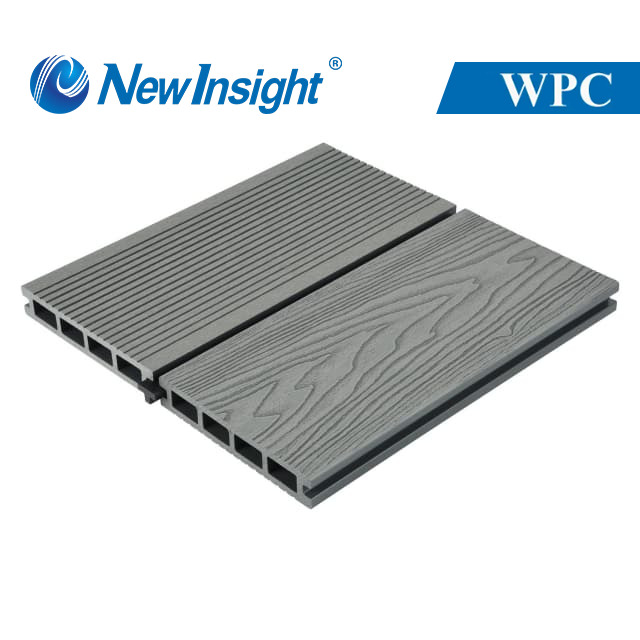
Adaptability accelerates installation. Dual-sided boards offer immense utility. These planks feature grooves on one side and a 3D wood grain on the other. This dual texture simplifies your procurement process. You only order one type of board. During installation, you simply flip the planks to create contrasting border designs. This design efficiency also maximizes usable material. If one side gets scratched during transport, you just flip it over. You reduce on-site material waste significantly.
Traditional pressure-treated lumber often utilizes harsh chemicals to fight rot. These chemicals can slowly leach into your surrounding garden soil. Furthermore, aging wood inevitably splinters. This poses a constant danger to children and pets playing barefoot.
WPC eliminates these risks entirely. The extrusion process binds the materials permanently. The boards never splinter. They contain no toxic preservatives. You protect your family, your pets, and your organic garden soil simultaneously.
Every building material carries trade-offs. We must examine WPC objectively to confirm its value proposition.
Zero Painting or Staining: You never need to purchase wood stains again.
High Rot and Pest Resistance: Termites completely ignore the plastic-encased wood fibers.
Eco-Friendly Composition: Manufacturers build these boards using recycled plastics and reclaimed wood waste.
Consistent Board Dimensions: Every plank arrives perfectly straight. You face no bowing or warping during installation.
You must prepare for the initial capital expenditure. Composite boards cost 20% to 40% more upfront than basic treated softwood.
Additionally, you must consider thermal retention. High-density composites contain plastic. Plastic retains heat in direct, peak-summer sunlight. Darker boards become uncomfortable for bare feet on 90-degree days.
Best Practice: Always select lighter color palettes like ash grey or light oak for unshaded gardens. Lighter colors reflect sunlight and mitigate heat absorption effectively.
We evaluate value over time, not just at checkout. Wood demands constant financial input. WPC demands almost zero. Let us compare the financial trajectory over 15 years.
Factor | Treated Softwood | Composite (WPC) |
|---|---|---|
Initial Material Cost | Lower | Higher (Premium) |
Annual Upkeep (Stains, Labor) | High (Repeats yearly) | None (Soap and water only) |
Board Replacement Rate | High (Warping/Splitting) | Zero (Guaranteed longevity) |
Expected Lifespan | 10 - 15 Years | 15 - 25+ Years |
The math heavily favors modern composites. You typically cross the break-even point in year four or five. After year five, the wood patio becomes actively more expensive to maintain. The composite patio remains entirely free of maintenance costs. You secure an excellent lifetime financial return.
Even premium materials fail if installed incorrectly. WPC requires specific installation techniques. You cannot treat it exactly like structural timber.
Thermal expansion ruins many composite projects. Plastic expands when warm and contracts when cold. This represents the number one reason WPC decks fail. If you jam boards tightly against a wall, they will buckle in the summer heat.
Common Mistake: Ignoring expansion gaps at butt joints.
You must leave correct expansion gaps at every butt joint. The specific gap depends on board length and local climate. Furthermore, you should utilize hidden fastening systems. These specific clips secure the board while allowing slight lateral movement. They accommodate expansion naturally without stressing the planks.
WPC boards carry heavy loads, but they are not structural lumber. They flex more easily than thick timber. You must build a highly rigid subframe underneath them.
Joist Spacing: Standard rules dictate joist centers between 300mm and 400mm.
Commercial Loads: If you place heavy hot tubs on the surface, reduce joist spacing to 300mm.
Warranty Compliance: Exceeding a 400mm span voids almost all manufacturer warranties. The boards will eventually sag between the joists.
Moisture-resistant boards still require airflow. The underlying timber subframe remains vulnerable to rot. You must ensure adequate ground clearance beneath the deck. Aim for at least 150mm of clearance. This space ensures long-term stability. It allows trapped moisture to evaporate. Proper cross-ventilation prevents mold accumulation on the underside of your joists.
Selecting the right garden materials involves strict shortlisting logic. You must weigh upfront costs against long-term freedom. If your budget allows for a slightly higher initial expense, WPC stands as the objective winner. You trade a single capital expense for a decade-plus of zero maintenance. You permanently eliminate sanding, staining, and splinter hazards.
Your next action steps involve aggressive vendor vetting. Contact suppliers and request physical samples. You should personally test the scratch resistance with a coin. Verify the core-to-cap bonding on capped boards to ensure they resist delamination. Finally, scrutinize the fine print of their 15-to-25-year warranties. Look for guarantees against both structural failure and severe color fade. A careful purchase today guarantees a beautiful, effortless garden for decades.
A: Yes, high-density composites retain thermal mass. They can become noticeably hot in direct, peak-summer sunlight. However, you can mitigate this easily. Choose lighter color palettes like pale grey or light cedar to reflect sunlight. Selecting advanced capped variations also helps reduce heat retention compared to early-generation dark boards.
A: You can reuse an existing subframe if it remains entirely structurally sound and completely rot-free. However, composite boards require stricter joist spacing (typically 300mm to 400mm). You will likely need to add extra joists to your old frame to prevent the heavier WPC boards from sagging.
A: Early-generation uncapped boards experience slight, expected weathering during their first six months before stabilizing. Modern capped composite boards behave differently. Their protective polymer shell offers strict color-fast guarantees. They virtually eliminate UV degradation, ensuring your patio retains its rich, original color for decades.