English
Views: 0 Author: Site Editor Publish Time: 2026-09-25 Origin: Site
The persistent challenge in property perimeter planning is balancing aesthetic authenticity with long-term structural integrity and maintenance overhead. Traditional timber requires continuous labor investments. You must stain, seal, and prevent rot regularly to keep the boards intact. Early-generation composite alternatives historically suffered from thermal warping and unnatural fading. This complicated the procurement decision for many property owners. Modern WPC fencing technologies solve these specific issues. We provide an objective, data-driven comparison of modern composites against traditional wood. You will learn about material science advancements, structural durability, and installation realities. This guide helps you finalize your perimeter strategy effectively. We evaluate material science advancements, weather resistance, and installation realities to guide your final procurement.
Lifecycle Cost Parity: While traditional wood presents a lower initial material requirement, WPC fencing typically achieves financial parity within 4 to 6 years due to the elimination of chemical treatments and routine board replacement.
Structural Longevity: Modern WPC resists biological decay, insect degradation, and moisture expansion, structurally outlasting untreated and pressure-treated timber by 15+ years in high-moisture or extreme-temperature climates.
Aesthetic Evolution: Advancements in manufacturing have bridged the visual gap, allowing composites to deliver a highly authentic tactile experience that far surpasses the synthetic look of vinyl fencing, though wood retains unique organic variations.
Installation Precision: WPC requires strict adherence to manufacturer guidelines regarding thermal expansion gaps and proprietary fastening systems, whereas wood offers higher on-site adaptability for uneven terrain.
Property owners often evaluate fencing materials based on immediate availability. This approach ignores the reality of outdoor exposure. True evaluation requires a shift toward a 15-to-20-year lifecycle model. You must account for material degradation, ongoing maintenance labor, and eventual replacement cycles. Establishing this baseline ensures you measure true long-term value rather than just upfront material requirements. We see many projects fail early because the initial planning ignored the long-term environmental impact on the chosen materials.
Environmental and climate stressors dictate material failure rates. You must identify your local variables before selecting a material. High UV index exposure accelerates fading and breaks down surface fibers. Annual precipitation levels determine rot risk. Freeze-thaw cycles cause trapped moisture to expand, which splits rigid materials. Soil moisture levels dictate how quickly ground-contact posts will decay. Each climate profile demands specific material defenses. Coastal properties deal with salt spray that corrodes standard fasteners and accelerates wood cellular breakdown. Desert environments bake the moisture out of timber, causing severe splitting and warping within the first two seasons.
Local compliance adds another layer of complexity. You must navigate local zoning laws and wind-load requirements. Coastal or high-wind areas often require specific structural reinforcements. Homeowner Association (HOA) architectural guidelines frequently restrict material choices. They may dictate specific aesthetic finishes, colors, or heights. You must verify that your chosen material meets all structural codes and neighborhood covenants before installation begins. Failing to check these requirements often results in forced tear-downs and complete project restarts.
Wood remains a traditional staple, but species selection heavily influences lifespan. Pressure-treated pine is the most common option. It resists insects initially due to chemical infusions. However, pine warps and twists heavily as it dries. Installers often nail pine boards while they are still wet from the treatment process. As the sun bakes the moisture out, the boards shrink and pull away from the fasteners. You must use stainless steel or polymer-coated screws. Galvanized nails react with the copper azole in modern pressure-treated pine, causing black streaks and eventual fastener failure.
Western Red Cedar offers a better alternative. It contains natural tannins that resist rot and insect damage. Cedar remains dimensionally stable but still requires surface sealing. Redwood provides premium durability and a rich aesthetic. Unfortunately, old-growth redwood is scarce. Farmed redwood lacks the dense growth rings that provide historical durability. The wide growth rings in modern farmed timber mean the wood is softer and more susceptible to moisture intrusion.
The biological reality of wood is a continuous degradation cycle. Wood is a cellular material. It absorbs water from rain and humidity. When temperatures drop, this trapped water freezes and expands. The expansion tears the wood fibers apart. This causes splintering and cracking. Sunlight breaks down lignin, the natural glue holding wood cells together. The surface turns gray and becomes porous. Fungi enter these open pores. Rot begins from the inside out, necessitating chemical preservatives and constant upkeep. When wood dries, it checks and splits along the grain. These checks become entry points for carpenter ants and termites.
Wood Plastic Composite has evolved significantly. First-generation composites struggled in the field. They often used unbalanced ratios of wood fiber to plastic. They absorbed moisture, swelled, and sagged between posts. Early versions also suffered from severe chalking and fading under intense sunlight. The industry moved past these early failures by refining the wood-fiber-to-thermoplastic ratio. Modern formulations use high-density polymers mixed with highly refined wood flour. This creates a dense, moisture-resistant core.
The extrusion process guarantees consistency. Manufacturers feed raw materials into a heated barrel. Rotating screws mix the wood flour, UV inhibitors, color pigments, and high-density polyethylene. The mixture forces through a die to form the exact profile of the fence board. Cooling tanks then solidify the plastic. This continuous process ensures uniform density throughout the board, eliminating the weak points found in natural timber knots.
Advanced manufacturing techniques introduced protective shielding. Upgrading to Coextruded WPC Fence Panels provides significant structural benefits. These panels feature a composite core wrapped in a protective polymer shield. The shield is extruded simultaneously with the core. It creates an impermeable barrier against moisture, stains, and UV rays. Uncapped alternatives remain vulnerable to slight fading and surface staining. Coextrusion locks in the color and protects the structural integrity of the panel. We recommend coextruded products for any application where the fence faces direct sunlight for more than four hours a day.
For environments requiring maximum durability, advanced options exist. You should evaluate Fully Capped WPC Fence Panels for extreme climates. These panels offer 360-degree protection. The capping material covers every inch of the board, including the grooves. This provides absolute impermeability to moisture. It prevents mold growth entirely. Fully capped systems resist severe scratching and weathering. They represent the highest tier of composite fencing technology available today. Installers prefer fully capped systems in high-moisture areas because they eliminate the risk of swelling at the cut ends.
Moisture is the primary enemy of any perimeter structure. Wood exhibits high susceptibility to fungal decay. Ground-contact rot destroys wooden posts quickly in damp soil. Clay soils hold water against posts, accelerating rot in wood. Sandy soils drain well but offer poor lateral support against wind. Even elevated pickets absorb splashing rain. WPC possesses inherent hydrophobic properties. The plastic encapsulates the wood fibers. This prevents water from penetrating the core. WPC panels do not rot, splinter, or host fungal colonies. They remain structurally sound even in high-humidity environments.
Wind load and tensile strength require careful consideration. Timber provides natural rigidity. A thick wooden post resists bending under wind pressure. WPC is inherently more flexible. To meet structural codes, composite systems utilize internal aluminum post-reinforcements. The aluminum provides the necessary rigidity to withstand high wind loads. The WPC acts as a durable, aesthetic sleeve over the metal skeleton. This combination delivers superior wind resistance compared to aging, brittle wood. When engineering a fence for hurricane zones, the internal aluminum structure is what actually carries the load.
The wood maintenance schedule demands continuous labor. You must power wash the fence to remove dirt and mildew. You must use a wide fan tip and keep the wand moving. If you stop, the high-pressure water gouges the soft wood fibers, leaving permanent scars. After washing, you must wait for the wood to dry completely before applying stain. If you trap moisture under the new stain, the wood will rot from the inside. You must sand away splinters and rough patches. You must reapply sealants or stains every two to three years. This process consumes entire weekends. It requires purchasing specialized chemicals and application tools. If you hire professionals, the labor costs compound quickly over a decade. Skipping this maintenance accelerates the degradation cycle exponentially. Once rot takes hold in a wooden post, you cannot reverse it. You must dig out the concrete footing and replace the entire assembly.
The WPC reality differs greatly, but you must debunk the zero-maintenance myth. WPC requires semi-annual cleaning. You should use simple soap and water. This removes surface dirt and pollen. If debris accumulates, surface mold can grow on the dirt itself. However, the mold cannot penetrate the capped composite shield. WPC requires zero structural treatments. You never need to sand, stain, or seal the panels. The operational labor drops to almost nothing. A standard garden hose and a soft-bristle brush are usually sufficient to keep the fence looking new.
Weathering profiles highlight a stark contrast between materials. Cedar and pine naturally silver over time. UV rays bleach the natural color within months. You must stain wood continuously to maintain its original hue. WPC offers a controlled, minimal color shift. High-quality manufacturers use inorganic pigments that resist UV degradation better than organic dyes. UV-stabilized composites typically fade slightly in the first few weeks. After this initial weathering period, the color locks in permanently. The fence looks virtually identical in year ten as it did in year one.
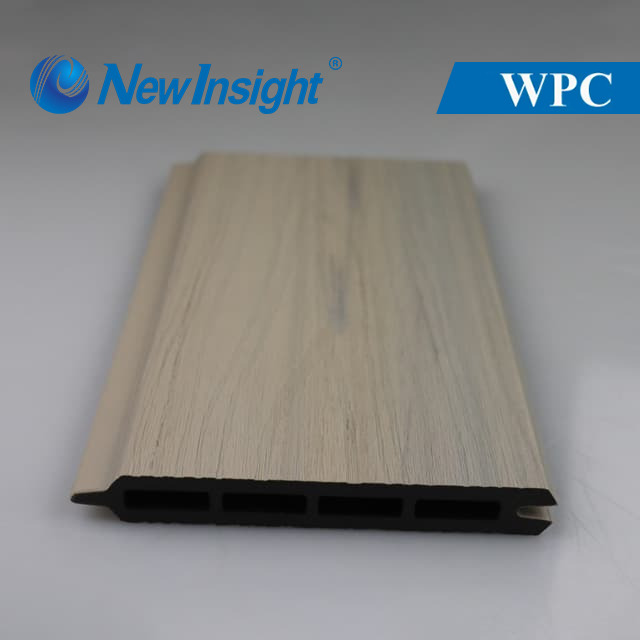
Manufacturing advancements are bridging the visual gap. Modern Wood Grain WPC Fence Panels utilize deep-embossing techniques. Rollers press complex, non-repeating grain patterns into the hot plastic during extrusion. Multi-chromatic technology blends different color tones into a single board. This creates streaks and color variations that mimic the heartwood and sapwood of natural timber. You get the visual warmth of natural wood without the risk of splinters. The tactile experience feels authentic and premium.
Property owners often compare WPC to vinyl fencing. Vinyl serves as a common low-maintenance benchmark. However, vinyl often presents a glossy, artificial finish. It looks like plastic. This synthetic appearance detracts from premium landscaping and upscale architecture. WPC provides a matte, textured finish. It blends naturally with outdoor environments. Property owners prioritizing a natural look consistently choose WPC over vinyl for this reason.
Density plays a crucial role in noise reduction. Standard wood pickets are relatively light. Sound waves pass through them easily. WPC composite cores are extremely dense. The combination of heavy plastic and compacted wood flour creates a solid acoustic barrier. A solid WPC fence achieves a higher Sound Transmission Class rating than a standard wood fence because of its mass. This density blocks street noise effectively. Properties near high-traffic areas benefit significantly from the acoustic blocking properties of dense WPC panels.
Line-of-sight protection ensures absolute privacy. Traditional wood fences develop shrinkage gaps. As the wood dries, the boards contract. A solid privacy fence soon features half-inch gaps between every picket. Interlocking WPC panel systems eliminate this issue. The tongue-and-groove design accommodates slight movement while maintaining a solid visual barrier. The panels overlap securely. This prevents sound waves from flanking through the gaps and ensures absolute privacy over the product's entire lifespan.
Resource sourcing impacts the ecological footprint of your project. Harvesting old-growth timber depletes natural carbon sinks. Farmed timber requires vast amounts of water and land. WPC utilizes recycled industrial plastics. It incorporates reclaimed wood fibers from furniture manufacturing. This diverts thousands of tons of waste from landfills annually. Choosing WPC actively supports the circular economy by repurposing existing materials into durable goods.
End-of-life disposal presents another environmental challenge. Chemically treated wood contains toxic preservatives. You cannot burn it safely. It often requires specialized disposal protocols. It leaches chemicals into landfills. Specific WPC formulations are fully recyclable at the end of their lifespan. You can grind down old composite panels and extrude them into new products. This closed-loop lifecycle makes WPC a highly sustainable choice for modern property development.
Feature | Traditional Wood Fencing | Modern WPC Fencing |
|---|---|---|
Moisture Resistance | Low. Absorbs water, leading to rot and swelling. | High. Hydrophobic core and polymer capping block water. |
Maintenance Needs | High. Requires sanding, staining, and sealing every 2-3 years. | Low. Requires only semi-annual soap and water cleaning. |
Aesthetic Stability | Fades to gray quickly without UV-blocking stains. | Retains color permanently after initial weathering. |
Installation Flexibility | High. Easy to cut, rack, and adapt to severe grade changes. | Moderate. Requires precise expansion gaps and stepped installation. |
Acoustic Insulation | Low. Sound passes through shrinkage gaps easily. | High. Dense core and interlocking panels block noise. |
Structural Lifespan | 10-15 years (depending on species and maintenance). | 25+ years with consistent structural integrity. |
Upfront capital expenditure varies significantly between materials. Traditional timber offers a lower entry point. You spend less on day one. Premium WPC materials require a higher initial investment. However, you must factor in the installation labor costs. Standard wood picket installation goes quickly but requires extensive on-site measuring and cutting. WPC systems rely on precision-heavy assembly. The interlocking panels slide together rapidly once the posts are perfectly plumb and spaced.
When you map out 10-year and 20-year financial projections, the narrative shifts. The comparative cost model illustrates a clear breakeven point. WPC’s lack of maintenance overtakes wood’s lower initial price within a few years. You stop buying stain, brushes, and replacement boards. You stop paying for pressure washing services. When you spend weekends maintaining a wood fence, you lose valuable personal time. If you hire contractors, you face rising labor rates over the next two decades. WPC locks in your costs on day one. The financial predictability appeals to property owners who want fixed budgets for their exterior maintenance.
Installing premium, low-maintenance WPC fencing impacts home appraisals positively. It boosts long-term curb appeal. An aging, weathered wood fence becomes a liability during a property sale. Buyers see it as an immediate chore. A pristine composite fence signals quality and low upkeep, increasing the overall attractiveness of the property.
Thermal expansion presents a critical risk in WPC installation. Plastics expand when heated and contract when cooled. You must engineer expansion gaps during installation. If you butt WPC boards tightly against posts in cold weather, they will buckle during summer heat waves. Manufacturer guidelines specify exact gap measurements based on ambient installation temperatures. Strict adherence to these thermal expansion rules prevents catastrophic structural warping.
Site adaptability highlights a distinct advantage for traditional timber. Wood offers superior flexibility for on-the-fly custom cuts. Installers can easily navigate radius curves and severe grade changes. You can rack wood panels to follow the slope of the ground smoothly. Rigid composite panel systems do not rack easily. You must typically use a stepped installation method on hills. This leaves triangular gaps under the fence line, requiring additional landscaping to secure the perimeter.
You cut composite boards using standard woodworking tools. However, the dense plastic dulls standard steel blades quickly. You must use carbide-tipped saw blades with fewer teeth to prevent melting the plastic during the cut. When routing or ripping boards, you must support the material continuously to prevent snapping. To ensure a successful WPC installation, follow these numbered field procedures:
Verify the exact post spacing requirements before setting any concrete footings. WPC panels cannot stretch to accommodate sloppy post placement.
Install the internal aluminum post stiffeners perfectly plumb. The composite sleeves will follow the exact angle of the internal metal structure.
Calculate the required thermal expansion gaps based on the current ambient temperature during the installation day.
Slide the bottom rail into the post brackets and secure it, ensuring it is perfectly level across the span.
Stack the interlocking tongue-and-groove panels one by one, checking for level every three boards.
Secure the top rail and install the post caps using the manufacturer-approved adhesive or color-matched screws.
Warranty evaluation requires careful reading of the fine print. Premium WPC products often carry 25-year warranties. You must understand what these actually cover. They typically guarantee structural integrity against rot, splintering, and severe fading. However, common void conditions exist. Improper installation, such as ignoring expansion gaps, voids the warranty immediately. Unauthorized modifications or using non-proprietary fastening systems also cancel coverage. Always use certified installers familiar with composite engineering.
To finalize your perimeter strategy, execute the following steps:
Calculate your total linear footage and map out severe grade changes across your property line to determine installation complexity.
Request physical material samples of fully capped panels to evaluate the wood grain embossing quality under your specific site lighting.
Consult with certified composite installers regarding local wind-load engineering requirements and specific aluminum post-reinforcement needs.
Review your HOA architectural guidelines to ensure the selected composite color and profile meet neighborhood compliance standards.
A: Modern manufacturing uses deep-embossing and multi-chromatic extrusion to mimic wood closely. While they lack the random imperfections of natural timber, they provide a highly authentic matte texture that feels premium and avoids the glossy, synthetic look of vinyl.
A: A properly installed WPC fence easily lasts 25 to 30 years without structural degradation. Treated pine typically fails within 10 to 15 years due to rot and warping. Cedar may last 20 years only if rigorously maintained and sealed.
A: Standard WPC mixes wood flour and plastic uniformly, leaving some wood fibers exposed on the surface. Coextruded panels feature a protective polymer shield wrapped around the core, providing superior resistance to moisture, stains, and UV fading.
A: High-quality capped WPC resists fading, experiencing only a minor color shift initially. Warping and sagging are prevented by using internal aluminum post reinforcements and leaving proper thermal expansion gaps during installation.
A: It is highly discouraged. Wood posts inevitably rot and warp, which will compromise the rigid, long-lasting WPC panels attached to them. WPC systems require proprietary aluminum or steel-reinforced composite posts for structural integrity.
A: Yes, especially in climates with high humidity, heavy rainfall, or intense UV exposure. The full capping provides absolute impermeability, preventing mold growth and ensuring the color remains vibrant without any surface staining over decades.